Victron MPPT Charge Controllers for RVs and Campervans
By • April 16, 2026
MPPT vs PWM, Features, 100/30 Explained
If you’re upgrading an RV, caravan, motorhome or campervan solar system, the charge controller you choose has a big impact on performance and battery life. This guide explains why MPPT controllers outperform PWM in most real‑world setups, highlights useful Victron SmartSolar features, and demystifies model numbers like “100/30.” For installation help, we offer mobile on‑site service across Auckland.
What does a solar charge controller do?
- It regulates solar panel output to safely charge your battery bank (AGM or LiFePO4).
- It applies the right charging stages (bulk/absorption/float) to protect battery health.
- It provides protection and monitoring so you can see how your system performs.
MPPT vs PWM — why MPPT usually wins
- How PWM works: A PWM controller essentially connects the panel to the battery and “pulses” to control voltage. The panel is forced close to battery voltage, so you lose the extra voltage potential your panels could provide.
- How MPPT works: An MPPT controller constantly tracks the panel’s Maximum Power Point (Vmp/Imp) and uses DC‑DC conversion to step the higher panel voltage down to the battery’s charging voltage while increasing current. Result: more harvested energy from the same panels, especially in cool weather, partial shading, or when roof space forces non‑ideal wiring.
- Typical gains: MPPT can deliver noticeably higher daily energy than PWM in RV use (often double‑digit percentage improvements), which translates into faster recharging and smaller risk of running flat on cloudy days.
- When PWM can be fine: Very small, budget systems with a single 100 W panel and modest loads. For most NZ touring setups with 200–600 W and lithium batteries, MPPT is the better long‑term choice.
Victron SmartSolar MPPT — features and benefits
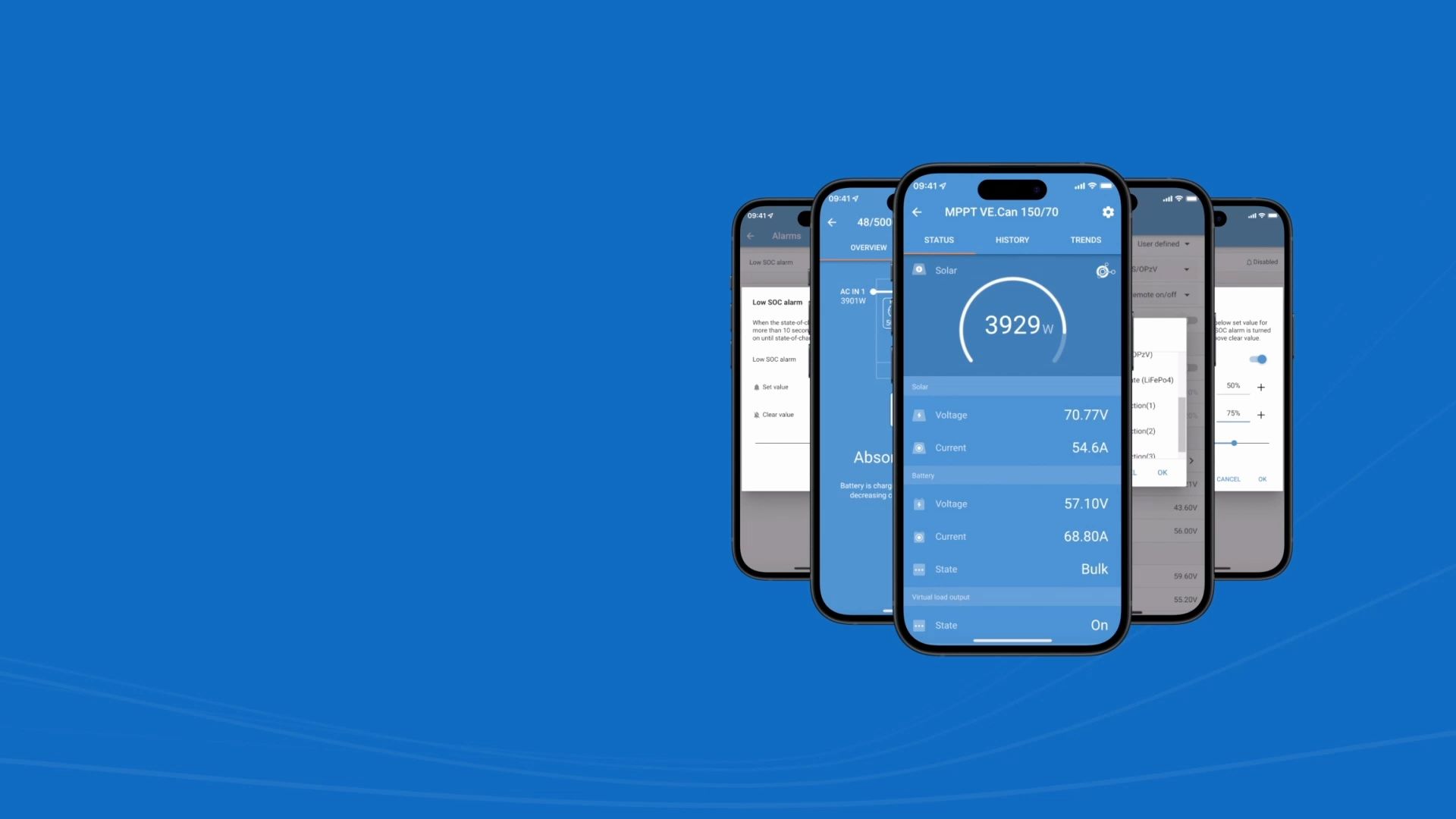
- Bluetooth app monitoring: Pair with the VictronConnect app to see solar harvest, history, live charge current, and to adjust charge profiles. No separate display required.
- Lithium‑friendly charging: Presets and custom profiles for LiFePO4 or AGM with correct bulk/absorption/float targets, and protections to avoid over‑ or under‑charging.
- Efficient tracking: Fast MPPT algorithms help maintain higher output during variable conditions (passing clouds, partial shading).
- Flexible panel choices: Safely run higher‑voltage panel strings (within controller limits), useful when roof space or cable runs make single‑panel, low‑voltage wiring inefficient.
- Integrates well with the rest of the system: Works alongside DC‑DC charging from the alternator, inverter/chargers, and battery monitors. Good system design keeps all charging sources balanced so your batteries charge quickly and safely.
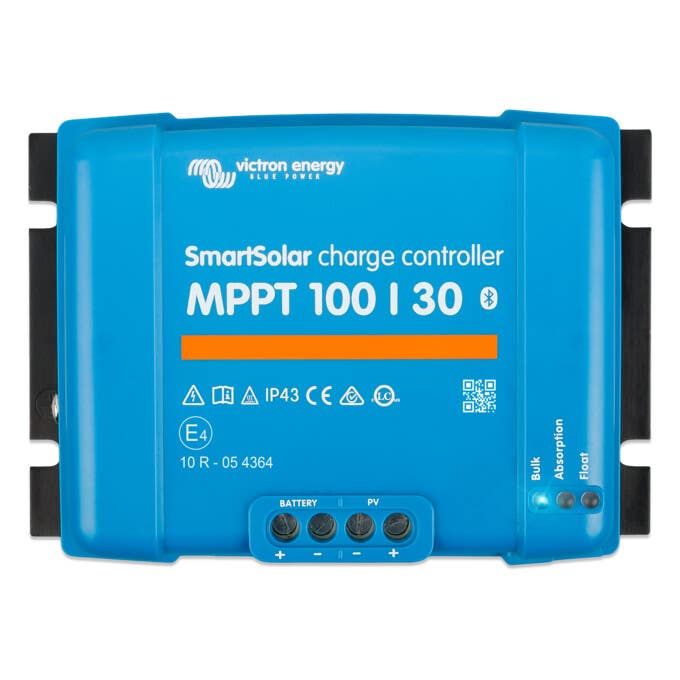
What “100/30” means on a Victron MPPT
- The first number (100) is the maximum PV open‑circuit voltage (Voc) that the controller can accept. In this case, 100 V max. You must design your panel strings so their total Voc, adjusted for cold temperatures, never exceeds 100 V.
- The second number (30) is the maximum charging current the controller can deliver to the battery: 30 A.
- Practical PV sizing: Because MPPT steps down the voltage, the allowable PV wattage is higher than 12 V × 30 A. As a rule of thumb, Victron’s recommended array size for a 100/30 is roughly 440 W on a 12 V battery bank or 880 W on a 24 V bank. Always confirm with the latest datasheet and account for real‑world factors (temperature, wiring losses, shading).
Series vs parallel with a 100/30 (quick tips)
- Series increases voltage and lowers current on the PV side, which reduces cable losses and suits MPPT. Ensure the total cold Voc stays under 100 V.
- Parallel keeps voltage low and increases current, which can demand thicker cables and higher‑amp protection but may reduce shading impact from one panel.
- Many RV roofs end up with two panels in series (if safe under cold Voc), feeding a 100/30, or larger arrays stepping up to a 100/50.
Sizing examples for typical NZ RVs
- Weekend caravan or campervan: 200–300 W of solar, 100–200 Ah LiFePO4, often a 75/15, 100/20 or 100/30 controller depending on expansion plans.
- Touring motorhome: 400–600 W of solar, 200–300 Ah LiFePO4, a 100/30 or 100/50 controller, integrated with DC‑DC (alternator) and shore charging.
- Heavy AC use (e.g., induction, espresso): Larger arrays plus higher‑current controllers (100/50+) and appropriately sized inverters, batteries, and cabling.
Installation pointers
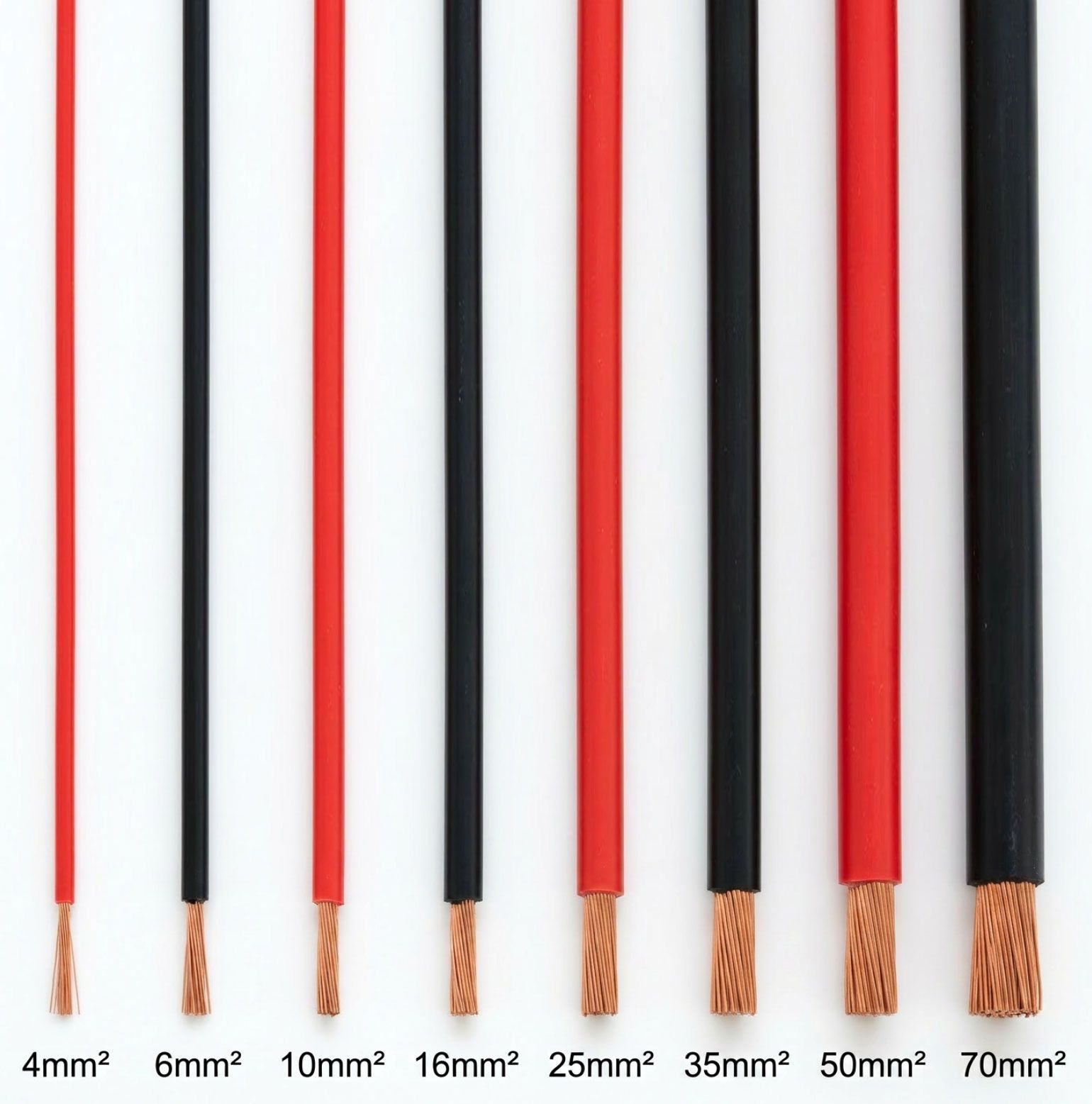
- Use correct cable sizing, DC‑rated fusing/isolators, tidy cable routing, and watertight roof glands. Good workmanship matters for reliability and safety over bumpy NZ roads.
- Combine solar with DC‑DC charging from the alternator for balanced charging while driving.
- Configure the controller for your battery chemistry and temperature conditions; verify absorption/float times for lithium vs AGM.
- If you’d prefer a pro install, we supply, fit, configure and troubleshoot MPPT controllers on‑site across Auckland.
Common questions
- Can I “over‑panel” a 100/30? Within reason, yes. It’s common to install PV wattage a bit above the controller’s ideal rating because the controller will current‑limit at 30 A. You must still stay under 100 V Voc (cold) and use suitable wiring/protection.
- Do I need DC‑DC if I have MPPT? Yes, if you want proper alternator charging while you drive. MPPT manages solar; a DC‑DC charger safely manages alternator output to your house batteries.
- Is MPPT worth it with lithium? Yes. Lithium’s ability to accept higher charge currents pairs well with MPPT’s improved harvest and faster bulk charging.
- Will MPPT fix shading? It can mitigate some loss, but shading still reduces output. Thoughtful panel placement and realistic expectations matter.
We provide mobile RV solar installation, upgrades, and MPPT setup across Auckland, no workshop visits needed.
Get a Free Quote for RV Solar
Mobile installation and upgrades for caravans, motorhomes and campervans. No workshop visits needed. Call or message and we’ll size your system properly.
Latest Posts