A DC‑DC charger is the safest, most reliable way to charge your house batteries from the alternator while you drive. It protects modern alternators, gives your AGM or lithium (LiFePO4) the right charge profile, and works alongside your solar MPPT, not instead of it. This guide covers the why, how and what‑size questions.
What a DC‑DC charger does
- Regulates charge properly: Delivers multi‑stage charging matched to AGM or lithium, so you reach full charge without over/under‑charging.
- Plays nice with smart alternators: Modern vehicles vary alternator voltage; a DC‑DC maintains a steady charge current anyway.
- Protects starting battery: Prioritises the starter and isolates the house bank when the engine’s off.
- Safer than a simple VSR/isolator: VSRs connect batteries; with lithium’s high current draw, that can overwork alternators and under‑charge or overheat cables.
Why do you still need DC‑DC even with solar
- Different sources, same goal: Solar charges when the sun’s out; DC‑DC charges whenever you drive. Together, they reduce reliance on generators and shore power and reach full charge faster.
- Cloud, shade and winter: Driving top‑ups cover days when solar is weak.
- Healthy charge cycles: Lithium and AGM both benefit from proper absorption/finish charging, DC‑DC helps you get there on travel days.
DC‑DC + MPPT: how they work together
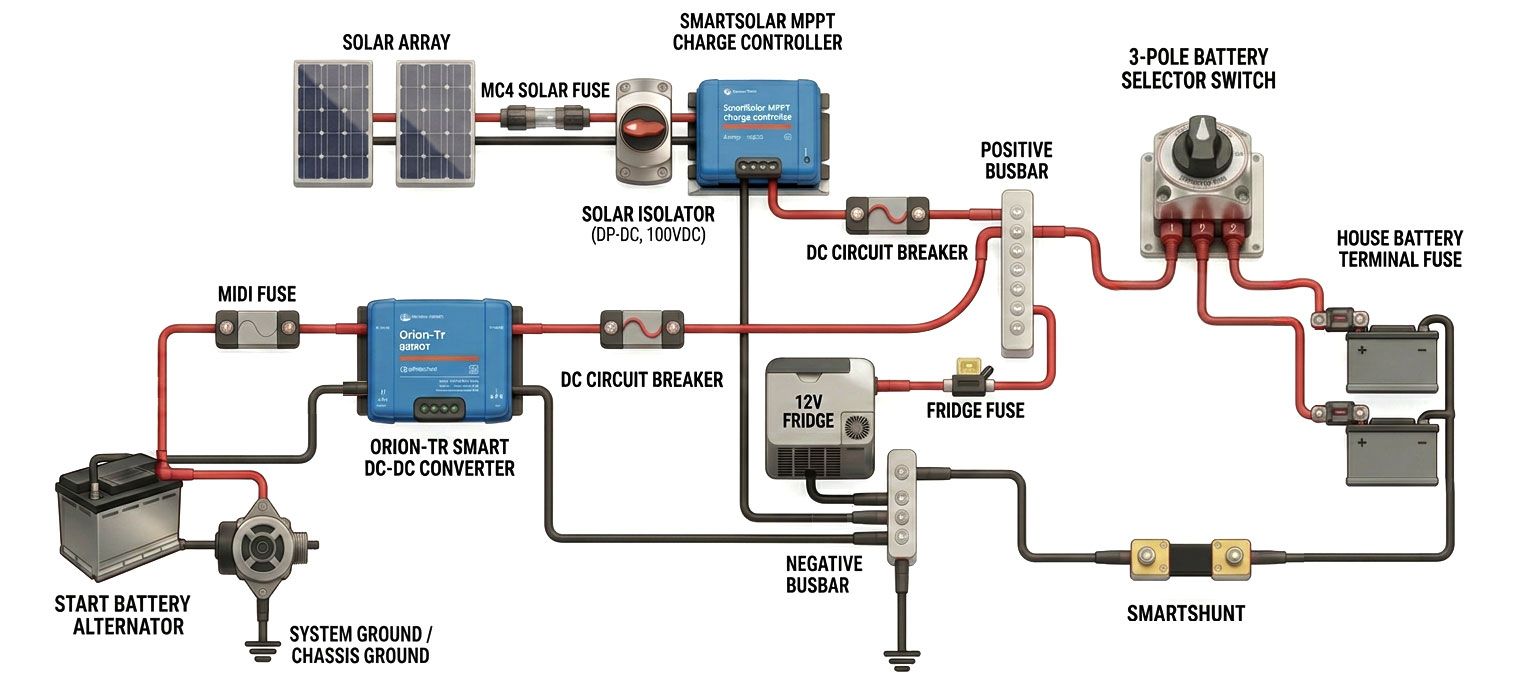
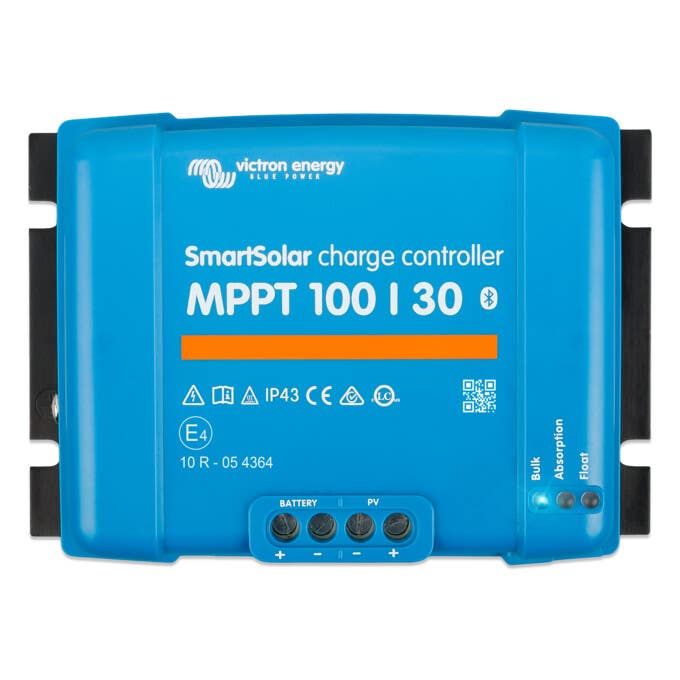
- Parallel charge sources: Both feed the house battery (through proper fusing). The higher‑voltage source will do more work; they naturally “share” as the battery voltage rises.
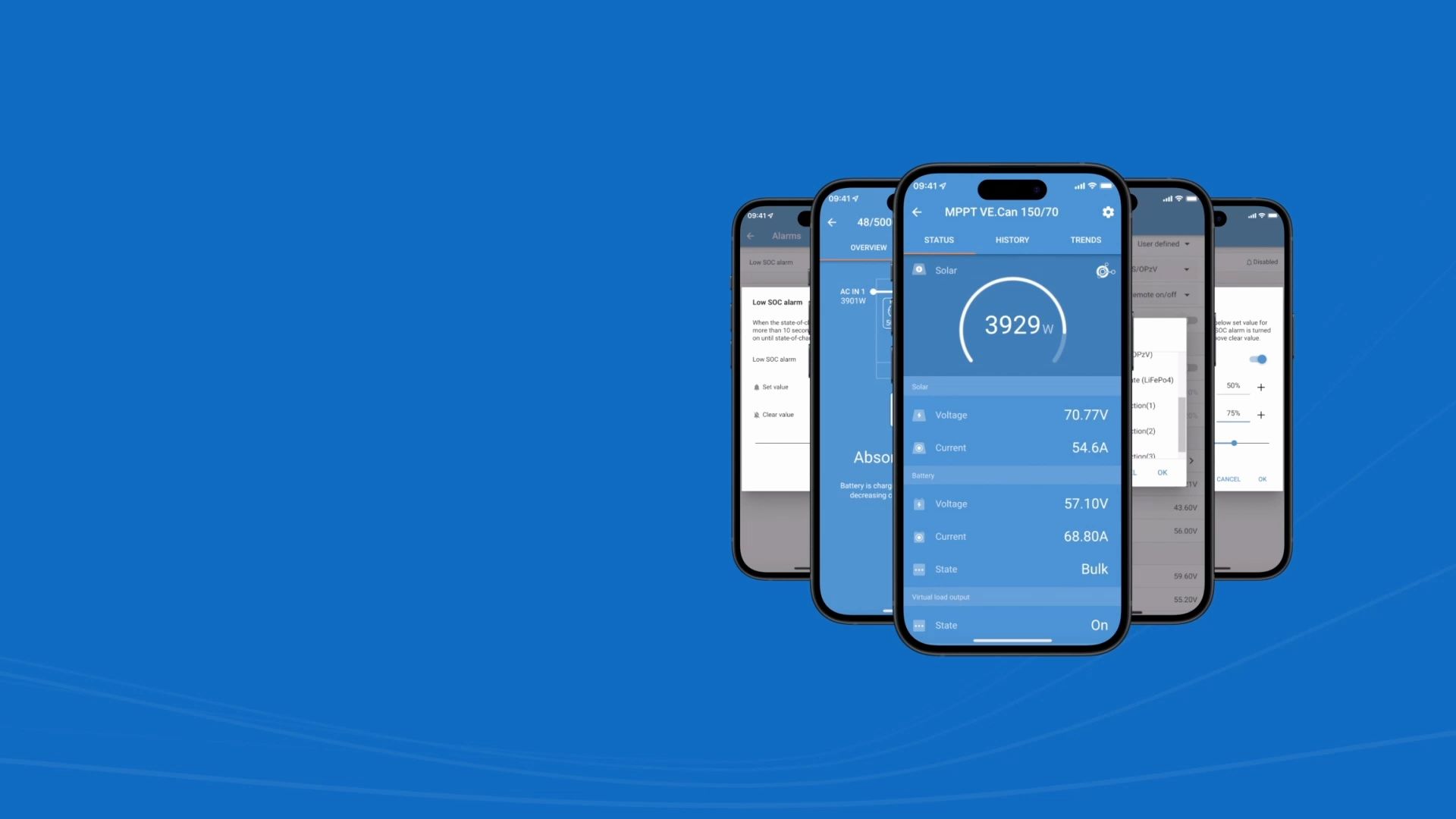
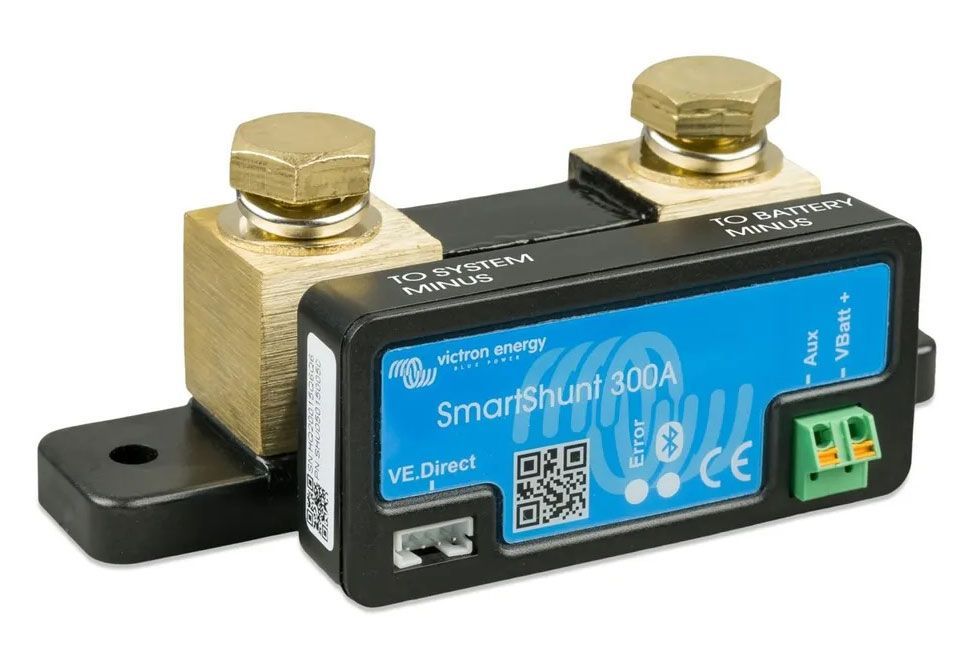
- Keep monitoring accurately: Route all negatives through your battery shunt so your State of Charge is correct (MPPT, DC‑DC, inverter and loads).
What size DC‑DC charger do I need?
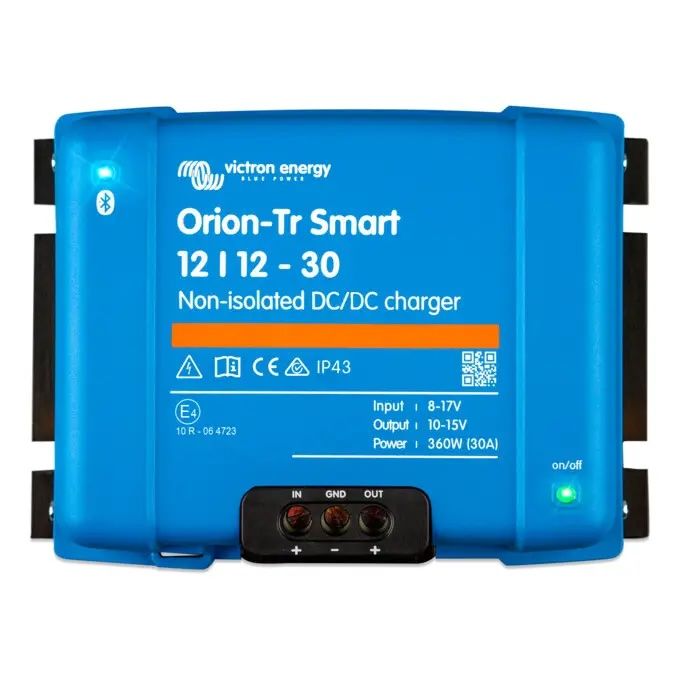
- Typical sizes: 30 A, 40 A, 50–60 A at 12 V.
- Quick picks (12 V house bank):
- Up to ~150–200 Ah LiFePO4/AGM, light–moderate loads: 25–30 A
- 200–300 Ah LiFePO4/AGM, touring loads (fridge, lights, pumps, small inverter): 40–50 A
- Balance three limits:
- Battery charge rating (C‑rate): Don’t exceed what your battery maker allows (lithium often 0.5C or more; AGM usually much lower).
- Alternator spare current: Leave a safety margin for vehicle systems; many alternators can spare ~30–60 A continuously, but verify for your model.
- Wiring and heat: Higher currents need larger cables and better cooling.
Wiring, fusing and cable sizes (simple rules)
- Keep runs short and fat: Voltage drop kills charge rate. Use quality copper (avoid CCA).
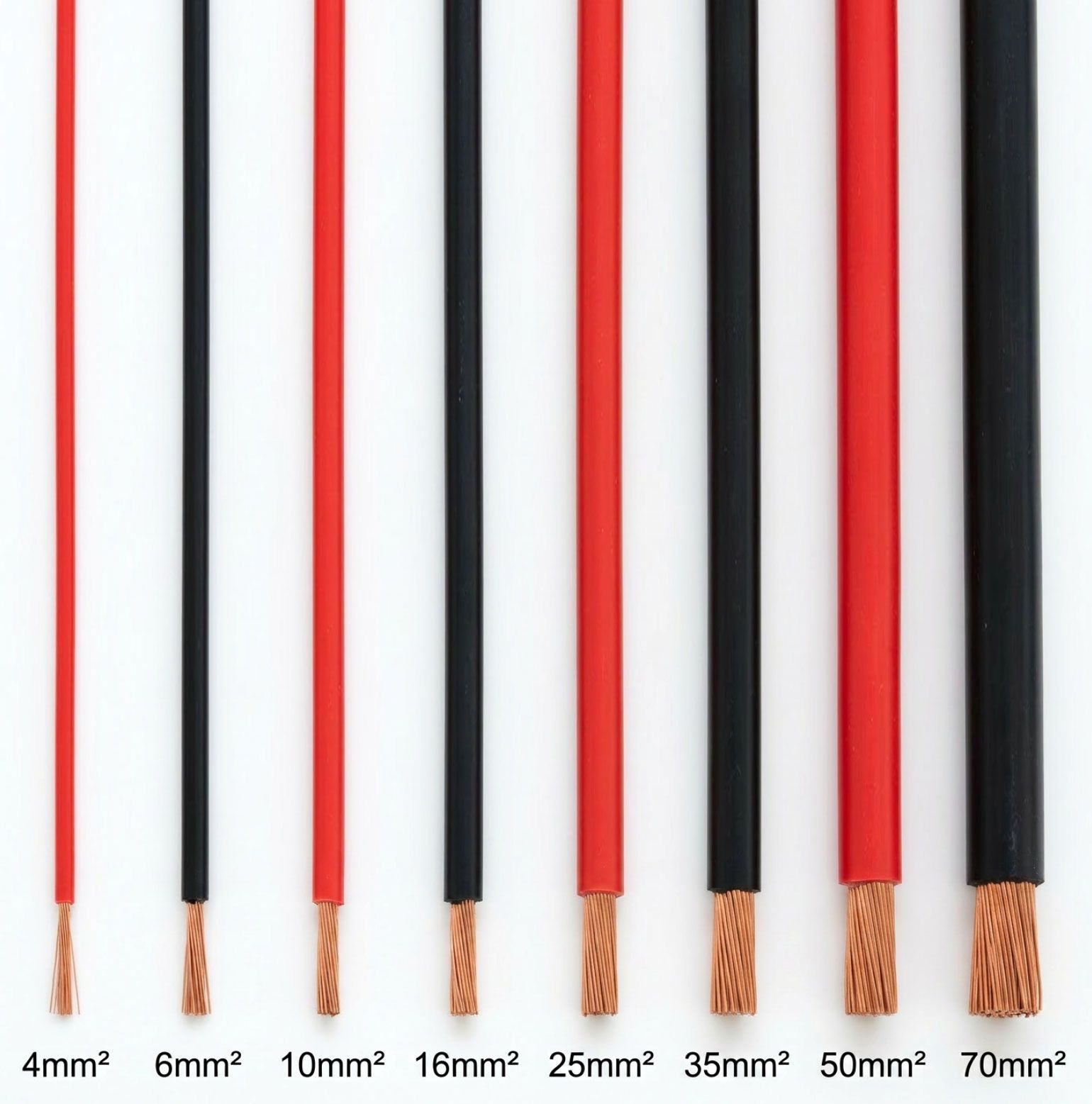
- Typical guides (12 V, short runs):
- 30 A: 10 mm² (AWG 8) with MIDI/MEGA fuses sized to protect the cable
- 40–50 A: 10–16 mm² (AWG 8–6)
- 60 A: 16 mm² (AWG 6)
- Fuse at both ends when both ends can source power:
- Starter side: protect the cable near the vehicle battery/alternator feed
- House side: protect near the house battery/busbar
- Good earths matter: Use a dedicated negative return of the same size back to the source or to a solid chassis/busbar as designed—no sketchy grounds.
Where to mount the DC‑DC
- Close to the house battery to minimise voltage drop on the output side.
- Cool, ventilated, dry location; not in hot engine bays or sealed lockers.
- Accessible for service; follow the maker’s clearance/cooling guidance.
Setup basics
- Select the correct chemistry/profile (LiFePO4 or AGM) and charger current.
- Use ignition/sense wiring if required by your vehicle’s smart alternator.
- Enable low‑temp protection for lithium (via BMS or charger settings if available).
- Confirm charge voltage at the battery terminals under load; adjust settings if your wiring has an unavoidable drop.
Common mistakes to avoid
- Undersized cables: Leads to low charge current and hot wires.
- No fuse (or only one): Protect both ends where applicable.
- Ground shortcuts: Poor returns create a voltage drop and unstable charging.
- Mixing VSR with lithium: Can overwork alternators and stress wiring.
- Bypassing the shunt: Your battery monitor will read incorrectly if any negative voltage doesn’t pass through it.
FAQs
- Do I need DC‑DC if I already have solar?
Yes. Solar can’t charge at night or on bad weather days. DC‑DC ensures reliable charging whenever you drive. - Will a DC‑DC harm my alternator?
No, sized correctly, it caps current draw and protects the alternator better than a simple isolator. - Can I charge lithium from the alternator safely?
Yes, with a DC‑DC set to a lithium profile and appropriate cabling/fusing. - What if I only do short trips?
Even short drives can add useful amp‑hours. A higher‑amp DC‑DC (within limits) helps recover faster between stops. - Where should my negatives connect?
Through the battery shunt on the “system” side so your monitor reads all charge/discharge accurately.