DC Wire Sizes for RVs: mm² vs AWG, Voltage Drop, and Quick-Pick Charts
By • April 16, 2026

Simple rules for sizing RV DC cables: mm² vs AWG, voltage drop, and when series beats parallel
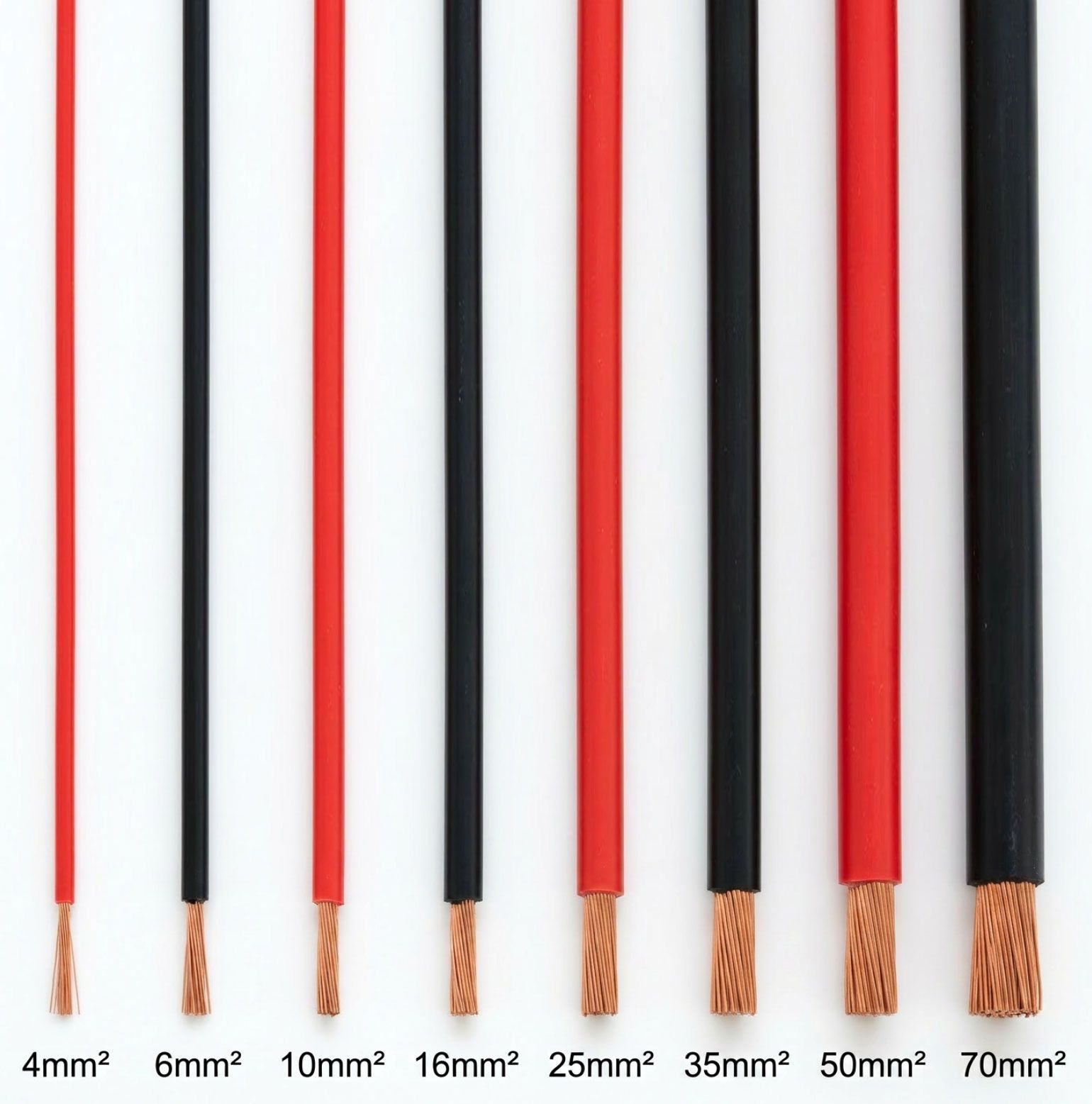
mm² vs AWG
- International: cable size is cross-sectional area in mm².
- US: AWG is used—lower AWG number means thicker cable.
How to pick a cable size (3 steps)
- Determine load current (A) and round-trip cable length (out and back).
- Pick a voltage-drop target:
- 1–2% for inverter/battery main feeds
- 2–3% for most 12 V branch runs
- Use a voltage-drop calculator or chart to size the conductor for the run, then verify the wire’s ampacity (continuous current rating) and always fuse to protect the wire. When in doubt, go up one size.
| Metric (mm2) | AWG Size | Approx. Current Capacity (Amps) |
|---|---|---|
| 0.5 | 20 | ~5-7 |
| 0.75 | 18 | ~7-10 |
| 1 | 17 | ~10-13 |
| 1.5 | 16 | ~15-20 |
| 2.5 | 14 | ~20-25 |
| 4 | 12 | ~25-32 |
| 6 | 10 | ~32-40 |
| 10 | 8 | ~40-55 |
| 16 | 6 | ~55-70 |
| 25 | 4 | ~70-95 |
| 35 | 2 | ~95-125 |
| 50 | 10 (0) | ~125-165 |
| 70 | 2/0 (00) | ~165-215 |
| 95 | 3/0 (000) | ~215-270 |
| 120 | 4/0 (0000) | ~270-340 |
This chart is a general guide only. Verify cable sizes and fuse ratings with manufacturer datasheets and applicable standards. Adjust for heat, bundling and duty cycle. Ampacity does not account for voltage drop, long runs often need larger wire than ampacity alone suggests.
Why higher voltage helps (smaller cable, higher efficiency)
- For the same power, doubling the voltage halves the current.
- Lower current reduces voltage drop and heating, allowing a smaller, cheaper cable for the same run.
Where to use higher voltage
- Solar array to MPPT: Wire panels in series (within controller limits) to raise PV voltage and cut current.
- 24 V house banks: Halves current on main DC feeds vs 12 V if your gear supports 24 V.
Watch-outs
- Stay below the controller’s max PV Voc at the coldest expected temperature.
- Ensure appliances and chargers are compatible with 24 V; plan DC-DC converters for 12 V loads and alternator charging if you run a 24 V bank.
Solar wiring: series vs parallel
- Series (often best on RV roofs with minimal shade)
- Pros: Higher voltage/lower current → smaller cables, less drop, fewer penetrations, good MPPT operation.
- Cons: Shade on one panel reduces string current (bypass diodes help but don’t eliminate it); must respect max cold Voc.
- Parallel
- Pros: Shade on one panel affects that panel mostly; some redundancy.
- Cons: Higher current → larger cables, more fusing/combiner hardware, more voltage drop.
- Rule of thumb: If shading is limited and your MPPT allows it, use 2–3 panels in series. If shading is common, consider parallel (with proper string fusing) or mixed strings.
12 V vs 24 V house banks
- 12 V: Most common; widest appliance support.
- 24 V: Better for larger systems (big inverters/loads) thanks to lower current on DC feeds. Plan DC-DC for 12 V loads and for alternator charging.
Safety must-dos
- Use tinned, automotive/marine-rated copper where appropriate; avoid aluminium for RV DC runs.
- Fuse or breaker every positive feed as close to the source as practical to protect the cable.
- Keep high-current runs short; use correct lug size, proper crimp tooling, heat-shrink, torque, and strain relief.
- Account for temperature, bundling, conduit, and duty cycle when sizing.
- Hire a licensed electrician for any 240 V AC work.
Get a Free Quote for RV Solar
Mobile installation and upgrades for caravans, motorhomes and campervans. No workshop visits needed. Call or message and we’ll size your system properly.